That's a Wrap!
The latest: 1. A scientific squabble on outdoors gene editing. 2. Amazing results with health coaching to shift diets away from refined carbs. 3. Fluoridation: US moving away while NZ enforces it.

What a year! Take a scroll through our Substack archive to see the breadth of the issues we cover. All too often, we highlight recurring patterns in the use of science to justify existing regulatory settings or to argue that new legislation is required. These patterns include the narrow constraining of scope, the selective identification of risk, the inclusion or exclusion of scientific evidence, and failures to apply scientifically rigorous processes when asserting whether a risk does or does not exist.
The Gene Technology Bill has been the highlight, reflecting the striking failure by the sponsoring innovation ministry, MBIE, which funds and promotes innovation science - to fail to declare its inherent conflict of interest in regulatory outcomes that prioritise deregulation and faster pathways to market of … innovations.
PSGRNZ would like to thank the New Zealand public, our members, the other grassroots organisations and the scientists, engineers and doctors who support PSGRNZ by providing feedback, criticism, and encouragement.
As PSGRNZ does not have a social media budget (we can’t even fund a blue tick on Z - Ok let’s call it X! … yet), we are enormously grateful to all of the people who share our articles, information and interviews
WHERE ARE WE AT WITH THE GENE TECHNOLOGY BILL?
In the final quarter 2025, the Gene Technology Bill second reading was positioned very low on the Order Papers. This indicates that the Government are very aware that there is currently very little political will to pass this Bill.
The 13 Nov vote (where the Bill was no.29 on the Order paper) was shunted to 18 Nov (no.38 on the Order paper). Yet only the earliest items on that Order paper were addressed.
Please remember – Attorney General Judith Collins explicitly directed that neither MBIE officials nor ‘stakeholders’ (people interviewed at an early stage of policy development) were permitted to consider retaining the existing Hazardous Substances and New Organisms (HSNO) Act 1996 and allow slight amendments. We have mentioned this to the Select Committee, in our Gene Tech report and in our November open letter to MPs.
PSGRNZ now wonder who has pushed gene tech reform apart from Judith Collins, MBIE and MBIE funded scientists? Who *actually* lobbied to get this onto the National Party election agenda (Harnessing Biotech manifesto), and who were they?
1. GENE EDITING - SCIENTISTS SQUABBLING – BUT VESTED INTERESTS DOWNPLAYED?
A key risk of MBIE’s deregulation agenda concerns the extent to which gene edited technologies and organisms would be permitted to be released into the outdoors.
There is a squabble going on in the Journal of Ecotoxicology and Environmental Safety. In September 2024 Aline Hoepers and colleagues published Predicted multispecies unintended effects from outdoor genome editing. The paper identified possible unintended outdoor risks from gene editing.
Hoepers, Heinemann and colleagues used computer modelling in silico to predict the potential for unintended changes in non-target organisms when gene editing technologies were used in situ in the environment (i.e. not in confined, laboratory environments). Their models identified many potential metabolic pathways that were at risk of unintentional alteration, and that, ‘because of the large number of unintended modifications’, the consequences of modifying them remained ‘unpredictable’.
Their paper suggested that existing legal frameworks i.e. risk assessment processes, needed to be updated to:
manage the risk of gene technology and the impact of gene technology reagents in the context of emerging contaminants and potential hazards, as threats to human and environmental health.
In response, MBIE funded University of Auckland scientist Andrew Allan, and colleagues, predominantly New Zealand based-scientists (who also receive funding from MBIE), released a paper: Human-mediated outdoor genome editing is not possible so therefore poses no risk to the environment (September 2025) that was scathing of the earlier Hoepers et al paper.
(PSGRNZ discusses the conflicts of interest problem here.)
Allan and colleagues dismissed the Hoepers et al paper as nonsense, claiming that it was fundamentally disconnected from reality, and that full regulatory risk assessment was well established (and therefore not requiring to be updated):
The scenarios presented by Hoepers et al. (2024) are so fundamentally disconnected from biological and agricultural reality that they cannot contribute meaningfully to risk assessment or regulatory discussions. By focusing regulatory and public attention on biologically implausible applications, the paper potentially undermines understanding of gene editing and diverts limited regulatory resources away from evidence-based assessment of actual applications. Credible scientific discourse on biotechnology regulation must be grounded in bio logical feasibility and technological reality, not in scenarios that contradict fundamental principles of cellular biology, molecular de livery, and agricultural economics. Most of the scientists who were co-authors work for New Zealand government institutions that are funded to develop biotechnologies, and who would benefit by not having to declare a large proportion of their biotechnology research, should the Gene Technology Bill be passed.
Government officials, and scientists who are funded to do biotech research by MBIE (the agency who would oversee the Gene Technology Act if it were passed) have consistently downplayed the environmental risk. The authors of the ‘scathing’ September article read like a Who’s Who of biotech interests, including Professor Barry Scott, Alexei Drummond, Andrew Allan. These three scientists were heavily involved in the production of a major Royal Society series of papers 2018-2019 that were published to promote gene editing technologies, but which never methodically reviewed any risk (including hazard) potential. (page 132/152).
I.e. the Royal Society, despite being tasked to advance and promote science (advancement includes ensuring trust in the science process), in their years-long gene editing work, directly downplayed any potential risk of gene editing technologies. I.e. Royal Society papers which did not consider risk, became the justification for deregulation.
These authors do not have experience in formal risk assessment of biotechnologies, and have worked for and/or work directly for institutions that produce biotechnologies.
The authors did not declare transparently for the reader, that the institutions that they work for receive funding by MBIE who, should the Gene Technology Bill be passed, would oversee a radically diminished range of potential GMOs (as the majority would be drafted out of the legislation (page 12)). Andrew Allan, Revel Drummond, Alec Foster and John Cardus currently have active research projects that use CRISPR-Cas editing.
Their paper does not consider how technology can scale up outside of laboratories, which can lead to many more intended and unintended releases – as well as known and unknown effects into the environment.
Jack Heinemann and colleagues published a paper in response: Genome editing outside of controlled facilities: A review of plausible futures and risks.
The response paper, published online December 2025, highlights that papers and patents tell the story of the known potential of use of gene technologies outside of an ‘outdoor’ biosafety containment facility. The range of organisms that can potentially be exposed are extraordinary via topical applications, via viral systems, as gene edited pharmaceuticals in companion animals and livestock, as antimicrobial and bacterial applications, via oral delivery systems (in food and drink) – beyond measure:
Both multi- and unicellular non-target organisms (NTOs) from different biological kingdoms may be exposed through contact, ingestion, or inhalation during use.
Gene editors are introduced into cells as plasmid or viral DNA, mRNA, ribonucleoproteins, or a combination of these. Once inside a cell, a nucleic acid cargo is released for either passive (e.g. during open mitosis) or active transport to a nucleus if there is one. Once the editor is either delivered to or synthesized in the target cell, the editing reaction occurs.
PSGRNZ’s opinion? It’s not very scientific that instead of robustly engaging in a high-quality conversation that might shed light on the ways that gene edited technologies could migrate into the environment and cause harm, an approach was undertaken that appeared designed to rubbish other publicly funded NZ scientists’ findings. From this position, it seems that the Allan et al paper was simply designed to shut down any debate.
Hoepers AM, Heinemann JA, Zanatta CB, Chu P, Hiscox TC, Agapito-Tenfen SZ (2024) Predicted multispecies unintended effects from outdoor genome editing. Ecotoxicology and Environmental Safety 282:116707. DOI: 10.1016/j.ecoenv.2024.116707
Allan AC, Scott B, Tate W, Jameson PE, MacRae E, Conner AJ, Drummond R, Foster A, Martin C, Caradus J. (2025) Human-mediated outdoor genome editing is not possible so therefore poses no risk to the environment. Ecotoxicology and Environmental Safety, 3:119609. DOI: 10.1016/j.ecoenv.2025.118609.
Heinemann JA, Hiscox TC, Zanatta CB et al. (2026). Genome editing outside of controlled facilities: A review of plausible futures and risks. Ecotoxicology and Environmental Safety 309 (2026) 119565. DOI: 10.1016/j.ecoenv.2025.119565
2. HEALTH COACHING: A GAME CHANGING PATH FOR PUBLIC HEALTH?
Most readers will have heard the doctor’s lament: the patient could get better if they just didn’t eat junk food and avoided sugar.
PSGRNZ have a forthcoming paper that highlights a huge reason for ‘noncompliance’ or ‘falling off the wagon’ – the problem of repeated glucose spikes and the associated ‘tie’ of carb cravings from diets that are chronically high in carbohydrates. The problem is not just sugar or ‘junk food’ but diets high in bread, white rice, ultraprocessed foods and other high-glycaemic, starchy carbohydrates. Diets high in rapidly absorbed carbohydrates can trigger sharp dopaminergic responses via mesolimbic reward pathways, while simultaneously driving spikes and crashes in blood glucose and insulin. The hallmarks of food addiction.
What is the answer for this? Health coaches in GP clinics and support in communities to support long term shifts away from addictive patterns.
A paradigm shifting New Zealand paper has just been published in Nutrients.
Zinn C, Campbell JL, Fraser L. et al. (2025) Carbohydrate Reduction and a Holistic Model of Care in Diabetes Management: Insights from a Retrospective Multi-Year Audit in New Zealand. Nutrients.17(24):3953. DOI:10.3390/nu17243953
Lead author Caryn Zinn of the Redefining Diabetes Care paper, together with colleagues specialising in low-carbohydrate interventions, subsequently conducted a retrospective, observational, real-world clinical audit across three New Zealand-based primary care practices, as a service evaluation, to assess models of care and clinical outcomes. The audit aimed to:
1. Describe changes in glycosylated haemoglobin (HbA1c) and diabetes status;
2. Identify factors associated with HbA1c improvement; and
3. Examine changes in related cardiometabolic outcomes. [1]
The three primary care practices utilise a three-pronged approach as a model of care that seeks to manage and potentially reverse prediabetes and T2DM which integrates (a) whole-food, carbohydrate-reduction, (b) a health-coach approach, and (c) supportive community initiatives.
While the methods were consistent (GP oversight, carbohydrate-reduction guidance, and access to health coaching), approaches differed, such as session frequency, content, mode of delivery, and cultural tailoring. These differences were associated with funding models, community-based education opportunities, and the extent of group or peer-support initiatives available at each site which were also a function of local demographics and cultural context. [2]
While the authors acknowledged limitations, including its retrospective design and lack of a control group, the study provided important insight into the consistency of outcomes across diverse settings that flexibly accounted for local culture, practice variation, and community resourcing. Importantly, the study included substantial Māori and Pasifika representation, key groups that experience elevated risk of prediabetes and T2DM. One practice that serves a high Māori and low socio-economic population multiple patients experienced substantial improvements in HbA1c levels, including to under the T2DM range.
44.4% of patients with PD achieved normal HbA1C levels at follow-up, 32.1% of those with T2D at baseline were able to reverse their condition.
The paper noted the importance of long-term support:
Anecdotal clinician feedback suggests that adherence often fluctuates, with patients cycling between engagement and lapses before re-committing. This aligns with findings from Unwin et al., where longer time on a low-carbohydrate programme correlated weakly with smaller HbA1c improvements, likely reflecting reduced adherence rather than loss of intervention efficacy.
The study provides evidence of the importance of support in communities that experience high risk of prediabetes and T2DM due to ethnicity and/or low-socioeconomic status.
These findings highlight the importance of culturally and systemically aligned models of care in populations facing longstanding inequities in access to effective T2D management. Such diversity and pragmatic design enhance generalisability compared with tightly controlled trials.
The Zinn et al 2025 paper joins an increasing group of case and cohort studies which demonstrate that the health coach model can be rolled out in general practice clinics, in the private sector and in communities, and that the resultant dietary changes produce improvements in metabolic and mental health and reduce dependency on medication.[3] [4] [5]
[1] Zinn C, Campbell JL, Fraser L. et al. (2025) Carbohydrate Reduction and a Holistic Model of Care in Diabetes Management: Insights from a Retrospective Multi-Year Audit in New Zealand. Nutrients.17(24):3953. Page 3.
[2] Zinn C, Campbell JL, Fraser L. et al. (2025) Carbohydrate Reduction and a Holistic Model of Care. Page 3.
[3] Saner E, Kalayjian T, Buchanan L et al. (2025) TOWARD: a metabolic health intervention that improves food addiction and binge eating symptoms. Front. Psychiatry. Vol.16. DOI: 10.3389/fpsyt.2025.1612551
[4] Zinn C, Campbell JL, Po M. et al. (2024) Redefining Diabetes Care: Evaluating the Impact of a Carbohydrate-Reduction, Health Coach Approach Model in New Zealand. Journal of Diabetes Research. 2024:4843889, DOI:10.1155/jdr/4843889
[5] Unwin J, Delon C, Giæver H, Kennedy C, et al. (2022) Low-carbohydrate and psychoeducational programs show promise for the treatment of ultra-processed food addiction. Front. Psychiatry 13:1005523.
3. FLUORIDE & NZ: BENCHMARK DOSE STILL IGNORED
The question for fluoridated drinking water is not if it will be pulled out of drinking water, but when. The ‘science’ for the safety of fluoridated drinking water has been undertaken by the Prime Ministers Chief Science Adviser and the Royal Society (again!) – but the papers are demonstrably crafted (and released) to support established policy and legislative time frames. The New Zealand Environmental Protection Authority (NZEPA) have never conducted a robust risk assessment to establish safe minimum exposure levels (a safe benchmark dose) for babies and children who could be exposed to toothpaste and fluoridated tap water; nor have the NZEPA established whether fluoridated water emitted from wastewater treatment plants into the environment is safe for that surrounding environment (including organisms in vulnerable developmental stages).
Following directives (and enforcement actions) by the Director-General of Health, compulsory fluoridation of drinking water has commenced in 2024 in Tauranga, and in 2025 in Rotorua and Whangārei.
We are yet to see judges take some effort to understand what a robust risk assessment that establishes a safe lowest benchmark dose for children at vulnerable developmental stages would entail. (Links to all papers here). Recently, the Tauranga City Council agreed to pass on to the Ministry of Health the petitioners request for an independent public enquiry. Well done Fluoride Free NZ and colleagues!
The actions by the Chief Science Advisors are eyebrow raising because the NZ government usually will look to USA regulatory jurisdictions to support policy positions. But our Chief Science Advisors have dismissed and/or ignored major papers and subsequent court cases:
NTP Monograph on the State of the Science Concerning Fluoride Exposure and Neurodevelopment and Cognition: A Systematic Review. NTP Monograph 08. National Toxicology Program Public Health Service U.S. Department of Health and Human Services.
The NTP controversy involved participating NTP expert toxicologists not agreeing to confirm that lower levels of fluoridated drinking water were safe – inferring that children could potentially be at risk. A court case then found that the US EPA had not followed its own risk assessment guidelines:
September 2024. Food & Water Watch, Inc., et al., (plaintiffs) v. United States Environmental Protection Agency, et al. (defendants). United States District Court. Northern District of California. Case 3:17-cv-02162-EMC. Judge Edward M. Chen.
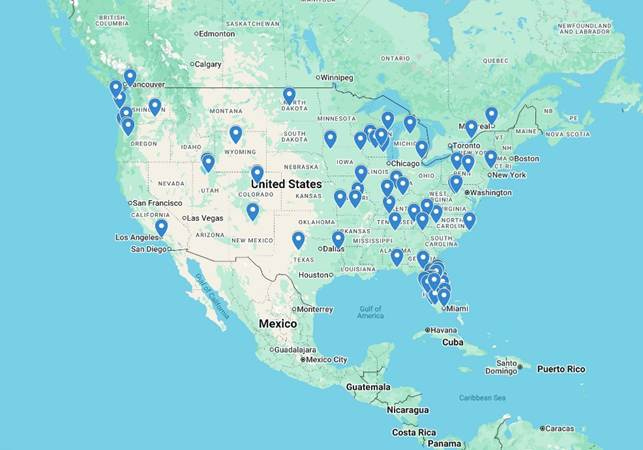
Following the NTP decision and the US court case, the U.S. Fluoride Action Network report that:
81 communities, serving water to approximately 29,539,568 people have ended, suspended, or prevented water fluoridation, including several communities that have indefinitely postponed or rejected proposals to initiate fluoridation.
Final words:
Regulatory risk assessment is trustworthy because government scientists follow robust and rigorous processes in determining risk from manmade technologies. If the processes are not followed, and if the risk assessment protocols don’t keep pace with new scientific knowledge, the findings of those scientists and their agencies cannot be trusted by the public. I.e. it is not only industry that must be satisfied that regulation does not over-reach, the public must be satisfied that risk assessment in the public interest is actually occurring… We haven’t seen robust risk assessment undertaken to scientifically justify the underlying policy that established the Gene Technology Bill, nor the content of the Bill itself; we haven’t seen this with fluoride; nor with EMF technology safety claims; nor with glyphosate. Ponder that over the New Year!
Ultraprocessed foods (UPFs) are manmade technologies, however they are not equally addictive, and personal harm arises from total dietary intake over time. Therefore, regulating UPF’s as a dietary input would expose the regulators to ongoing legal contestation by industry because there are too many uncertainties. It is instead when we consider the dietary impact of carbohydrates which provoke dopamine responses, drive hyperglycaemia and hyperinsulinemia, and review the impact to the individual (which is now possible), that we can understand the inter-relationship between the cumulative carbohydrate burden and individual risk and take individual steps to support change away from these detrimental diets.
A thousand, million blessings for a happy, loving, healthy & creative 2026.